
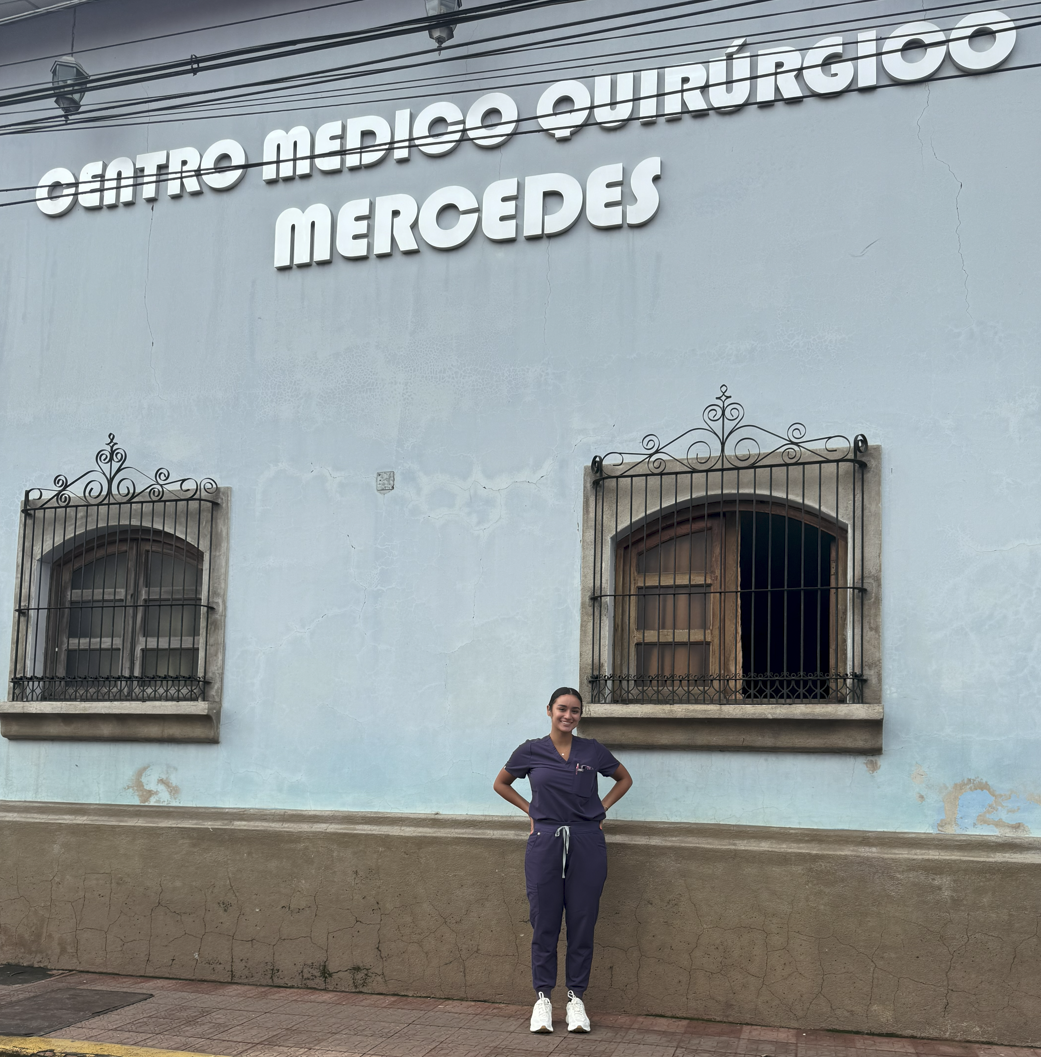
The Megan Rand Scholarship helped Emily Medina serve at a small hospital hours away from Nicaragua’s capital city of Managua.
Emily Medina came to the Megan Rand Scholarship with a strong sense of purpose and a desire to better understand how care is delivered in communities with limited access to resources. As the daughter of Dominican and Mexican immigrants, and as a student already drawn to underserved care, she saw the scholarship as a chance to step beyond the classroom and into a setting that would challenge her perspective and deepen her growth as a future clinician.
Answering the call
Emily learned about the scholarship during her first year in PA school, when Jenny (Rand) Smith spoke to her class about Megan’s life and the kind of service the scholarship was created to support. What stayed with her most was the idea that meaningful service is not limited to familiar places or comfortable conditions.
Emily was inspired by Megan’s willingness to travel, adapt, and care for people in places very different from her own experience, and she decided to apply. “I wanted to see how different other cultures are, how healthcare is in other places, and how we can meet people where they’re at," she said. “I thought that I knew what social disparities were… and then going there I realized, this is nothing like what I had seen before."
Into Nicaragua
Emily would spend five weeks in Nicaragua, where she completed her rotation at a small hospital several hours from the capital, Managua. The experience began with uncertainty: the placement came together late, and international travel on her own felt daunting. But the rotation aligned with the kind of population she hoped to serve and the kind of clinician she wanted to become.
What she encountered there was dramatically different from the clinical settings she had known in Boston. The hospital was small, humid, and working with limited infrastructure: handwritten notes instead of electronic records, inconsistent running water, no air conditioning in many rooms, and pediatric patients sharing tight spaces.
Learning in a different system
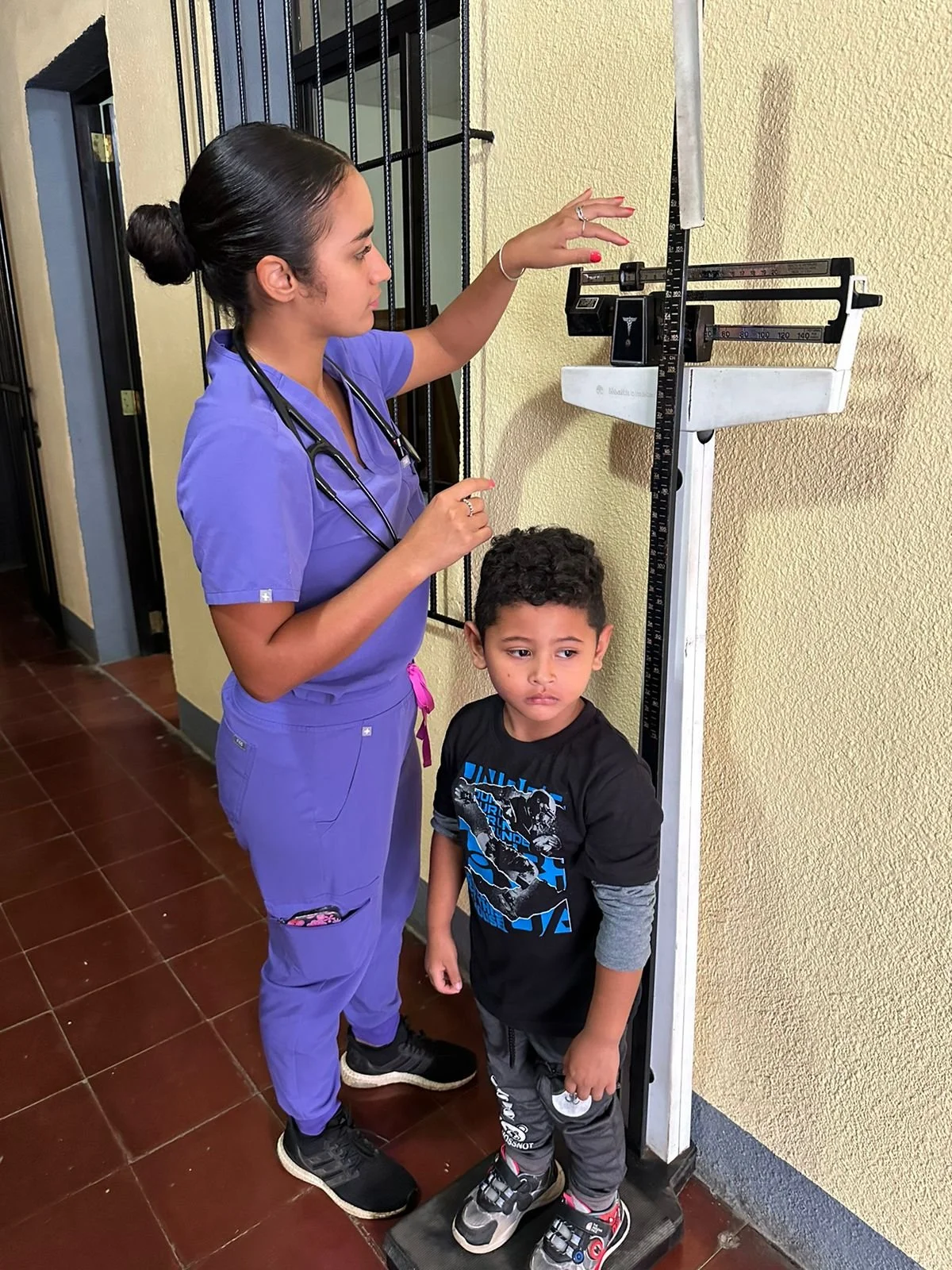
Emily's rotation taught her new, practical techniques as well as flexibility and humility.
Once there, Emily worked alongside pediatricians and saw firsthand how medicine functions when technology, sanitation systems, and specialist access cannot be taken for granted. She cared for patients with diagnoses that were uncommon in her training experience, learned practical techniques she had never needed before, and adapted quickly to a clinical environment that required observation, flexibility, and humility.
Emily learned quickly that fluency alone does not overcome cultural differences. Although Emily speaks Spanish, the local slang and dialect were unfamiliar, and she often had to ask patients and clinicians to explain things in other ways. That challenge became part of her learning; later, as a clinician in the U.S., it would help her communicate more effectively with Spanish-speaking patients.
A lasting human lesson
One of Emily’s most challenging moments was caring for a baby boy who was dying from a liver tumor. She watched as the child’s family remained at his side in the heat, and as the hospital staff, deeply connected to the people they served, gathered with a priest to baptize him. For Emily, it was a profound example of how closely medicine, community, and human dignity can be woven together.
She was struck not only by the severity of need, but by the gratitude and patience of the patients around her. “Everyone was just so grateful,” she said, remembering crowded waiting rooms where people sat in the heat, simply thankful for the chance to see a medical provider.
Carrying it forward
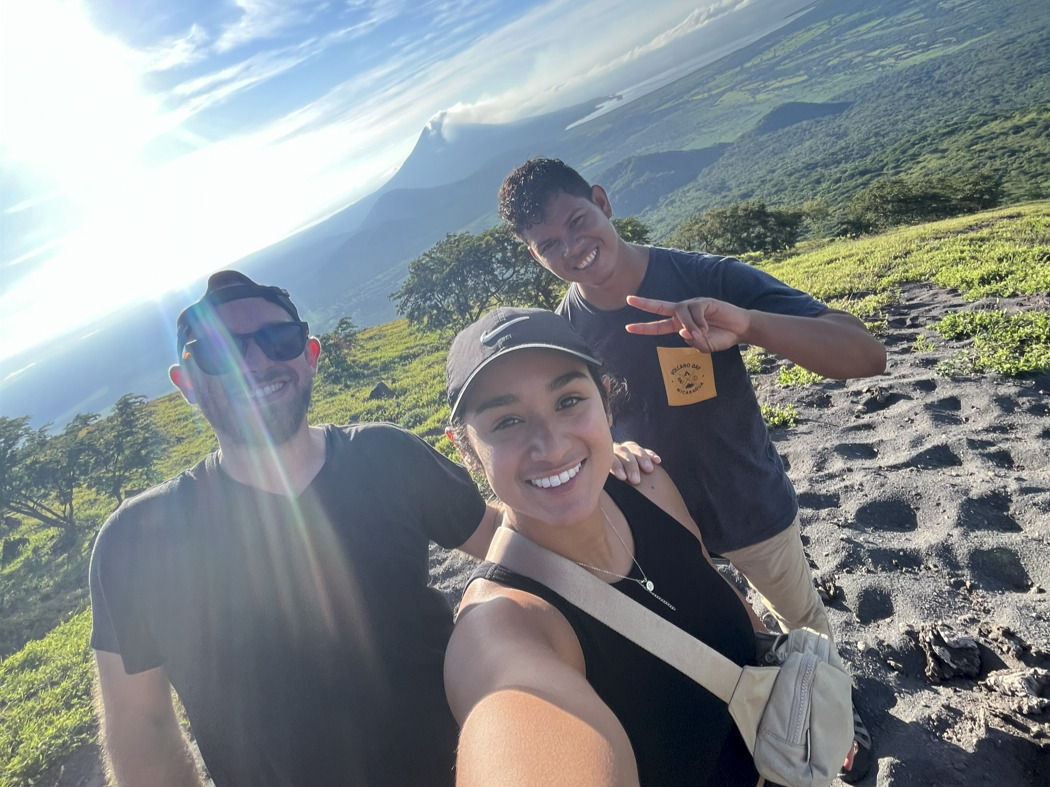
Emily learned the value of taking extra steps to help patients navigate barriers to getting care.
“The Megan Rand Scholarship took me from a classroom in Boston to a small hospital in Nicaragua, where I saw how little some communities have and how much we still have to give. Taking that extra step for patients isn’t for everyone, but it can be life-changing when you do.”
The rotation reshaped Emily’s understanding of healthcare disparities and strengthened her commitment to meeting patients where they are. It also changed the way she practices: taking extra steps to help patients afford prescriptions, explain diagnoses in culturally familiar terms, and navigate barriers that might otherwise keep them from getting care.
After graduation, Emily Medina, MPAS, PA-C, worked in family medicine at Unity Health Care, where she continued to serve diverse and underserved patient populations. She now works as a Gynecology PA in West Virginia. Looking back on her scholarship experience, her advice to future students reflects the same spirit of courage and growth that defined Megan’s life: “Remember your ‘Why’ and be okay with getting out of your comfort zone. You can’t really grow if you’re always comfortable.”